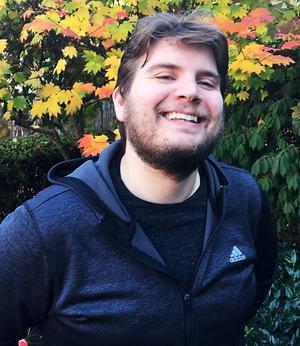
We're excited to welcome our new strategic associate, Andrew Holik, to the Mandate Media team! A DC native, we're excited that he's decided to move to Portland to join us! Previously, Andrew's worked on Capitol Hill and in the nonprofit sector, most recently with the Smithsonian Institution. Welcome Andrew!
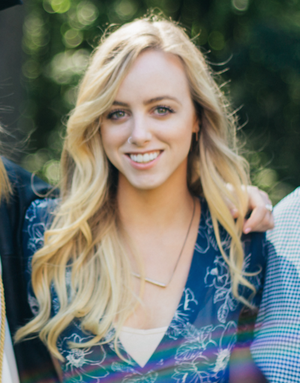
Mandate Media keeps on growing! Welcome to our newest strategist, Callie Rice Wine. Previously, she managed a global outreach program for the International Alliance for Responsible Drinking, with a particular emphasis on responsible digital marketing and anti-drunk driving programs in emerging economies. In the wake of the 2016 election, Callie founded the political engagement start-up CouchActivism.org. Welcome to the team!

We're excited to welcome our new strategic associate, Saba Saleem, to the Mandate Media team!
Saba works at the intersection of process and product, ensuring timely delivery and quality assurance for our clients' social media, emails, and website updates. Coming from a family of public service, Saba has worked with the Nonprofit Association of Oregon and Multnomah County, and has volunteered with Multnomah County Libraries, Start Making A Reader Today (SMART), Adventist Health, and Student Leaders for Service (SLS). Welcome Saba!
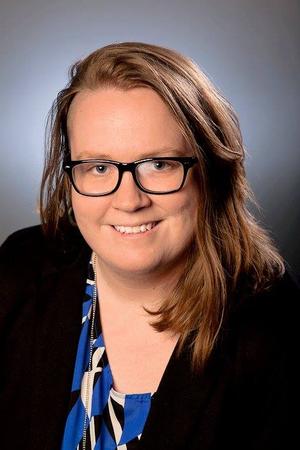
A big Mandate Media welcome to Julie Taylor-Gomia. She's our new digital advertising strategist, using paid media to build big audiences that will happily engage with our clients. Passionate about progressive politics, she will add her deep experience in retail digital strategy and e-commerce to our strategic approaches for our campaign clients.
We are pleased to welcome Ben DuPree back to the Mandate Media team! Ben was part of our team in 2012-13. Previously, he served the communications staff for Jeff Merkley's historic 2008 Senate race, and in 2010, he was spokesman and deputy campaign manager for Senator Ron Wyden's re-election effort. He's also worked for OLCV and Labor Commissioner Brad Avakian. Welcome back, Ben!
Welcome to the newest member of the Mandate Media team, Chelsie Kinney! Chelsie comes to us from the nonprofit sector. As our executive assistant, she makes sure that Kari and our entire team is operating at peak performance and serving our clients well.
Say hello to the newest member of the Mandate Media team: Craig Dorfman has been a bestselling author, a journalist, an English and Math teacher, and a rock drummer. Now, he's a digital strategist ready to win in 2018. Let's go!
- Feb.8,2016
- by Kari Chisholm
Some call the odd-numbered years "off-years" for politics, but that's not how we see it.
We spent 2015 building big email lists and beautiful websites, launching game-changing campaigns, and raising a bunch of money by helping our clients find their voice and tell their stories. 2015 was our most productive "off year" yet, and we can't wait to turn all that sweat into big wins in November!

- Jan.13,2016
- by Suvi Chisholm
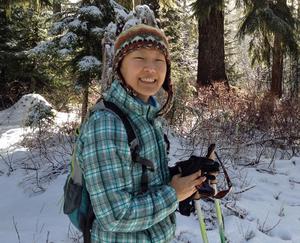
We're super excited to welcome our new data and analytics guru, Tammy Lee, to the Mandate Media team!
Tammy Lee crunches numbers and eats big data sets for lunch. Tammy recently earned a PhD in environmental sciences from WSU, where she studied how communities of plankton respond to external stimuli. Don't think about it too hard, but that's surprisingly related to helping our clients multiply and mobilize their audience of grassroots supporters. Welcome, Tammy!
- June16,2015
- by Kari Chisholm
Do you know the ins and outs of digital advertising? Ready to change the world from your desk in Portland? If so, we've got a job for you. We're looking for a Digital Advertising Strategist who is smart, happy, and creative to join our team. Get all the details here.
- April1,2014
- by Kari Chisholm
Big news!
Greg Buss has joined our team in our Portland office. Greg joins Mandate Media following a decade-long stint in Los Angeles where he served as Congressman Xavier Becerra's communications deputy, and most recently worked as business development supervisor at a leading global law firm. Early in his career, Greg helped Rep. Becerra lead the way as one of the first members of Congress to integrate social media into his communications strategy.
A native of Portland, Greg joins our team as a campaigns and advocacy strategist -- designing list-building strategies, writing emails that engage our clients' supporters and raise money, and more. He's also fluent in Spanish, and will be leading the way with our clients that need a bilingual component to their digital program.
We are excited to have him on board!
-Kari
- March25,2014
- by Kari Chisholm
Is Facebook audience reach cratering? Well, there sure does seem to be a lot of apocalyptic talk going on.
Mandate Media's president, Kari Chisholm, weighs in on the controversy that's got digital marketers and online campaigners up in arms.
Read more...
- Jan.12,2014
- by Kari Chisholm
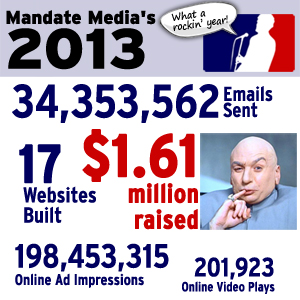
At some point, every political consultant gets asked the question by friends and loved ones: “what the heck do you do all day, anyhow?”
Fair question.
For us, we spent our days (and more than a few late nights) in 2013 helping clients expand their reach online.
Our world has changed – no longer are digital consultants just build-a-website guys. Now, we work every day to help our clients grow their email lists and social media fan bases, figuring out how to engage those audiences in effective action, and raising money. Big piles of money.
Read more...
- Jan.7,2014
- by Kari Chisholm
A recent article from e.politics asked the question, "Should campaigns use digital staff or digital consultants?"
As a digital consulting shop are answer is, both. Both, but with the right mix. For tasks that are one-time projects, outsource. For tasks that require substantial expertise, built on experience from dozens of campaigns, outsource. For tasks that require substantial embedded blow-by-blow daily knowledge, keep it in-house.
The best campaigns that we work with break that down like this:
- Website build and tools: digital consultant
- Online advertising: digital consultant
- Email list-building: digital consultant
- Email writing/engagement/fundraising: digital consultant, with heavy engagement from campaign staff
- Social media: campaign staff, with heavy engagement from consultant when it relates to email list-building
The "controversial" one above is probably email writing. My take is that it used to make sense that it should live inside the campaign. Back when it was mostly "art", i.e. staying on-message in a compelling way, that was fine. But these days, the email stuff is much more "science", i.e. subscriber bucketing, A/B testing, multi-layer and multi-touch campaigns. And that means it should be done largely by folks with way more experience.
Of course, it all depends on what scale of a campaign we're talking about. A presidential campaign can afford to bring in consultant-level folks on staff. A Senate race will almost always have a digital communications person (who, in my book, should also do a lot of candidate staffing/driving) to go along with a press/communication person. These days, most Congressional races don't even have communication directors (choosing instead managers with communication skills), which means that those races tend to rely more heavily on digital consultants.
Even the very best staffer only sees one campaign at a time, albeit in a much more intensive way. A digital consultant can see dozens of campaigns each cycle, and bring lessons learned to the campaign much more quickly.
- Dec.9,2013
- by Kari Chisholm
I've got some (mostly) exciting news here at Mandate Media -- some arrivals and departures, to be precise.
For starters, we're bummed that our man Ben DuPree is leaving our team at the end of the year. Of course, we're also a little bit excited because he's leaving us to dedicate himself full-time to finishing up his first novel while researching a second. The first has something to do with a small cult in Oregon and California. He won't tell us much of anything about the next one, except that it relates somehow to the end of the world. Someday, we'll be telling our friends to read the books before they go see the movies.
Read more...
- July1,2013
- by Suvi Chisholm
10,000. That's how many Facebook pages CrowdTangle has been studying for the last year. They brought their knowledge of what's popular on Facebook to a Netroots Nation training session I attended this year.
As the Marketing and Advertising Strategist at Mandate Media, I spend a lot of time checking out political and progressive organizations' Facebook pages, so this session was of particular interest to me. Most stuff we already put into practice for our clients but there were a few surprises.
Read more...
- June28,2013
- by Ben DuPree
Hi. I'm Ben DuPree. Strategy and copywriting are my game here at Mandate Media, which means you'll usually find me turning myself inside-out, searching for new and creative ways to inspire our clients' supporters to take action through e-mail campaigns and social media.
When our team went down to San Jose for Netroots Nation, my approach was simple: Attend sessions that would provide insight and inspiration on my writing. This army of grassroots activists and political professionals would certainly have a few ideas up their sleeves, a few new tricks to teach this old dog, right?
Right.
Read more...
- June27,2013
- by Meaghan Lamarre
Since I work mostly on the technical side of things here at Mandate Media, most folks assume I was either a computer science or political science major in college. Truth is, I majored in psychology. Specifically, social psychology. So while we were all at the Netroots Nation conference last week, I jumped at the chance to return to my academic roots in a workshop entitled "Beyond the A/B test: Using Social Science Theory to Get More from Your List" and I've returned to work with a new perspective on the hot-hot-hot topic of testing.
Read more...
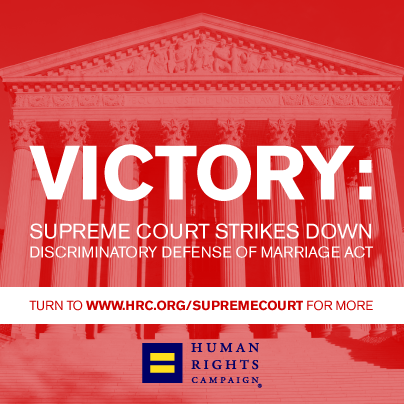
Same post, same graphic, same time. Sorry Google+, Facebook is the place for conversation about breaking news.
129 people gave this image a +1 on Google+, and 40 shares. Twitter is a bit better with 1,237 favorites and 4,906 retweets. And Facebook? It's winning the internet with 58,860 likes and 49,927 shares (so far!)
- April8,2013
- by Suvi Chisholm
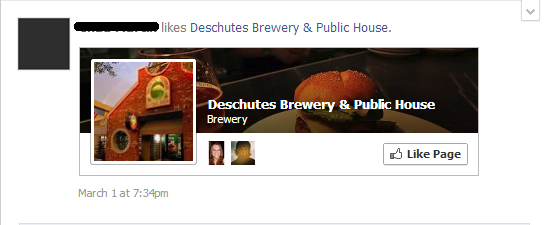
You may have noticed a small change in your Facebook news feed over the last few weeks. Photos are a bit bigger and images in shared links are too.
And now when a friend "likes" a Page you see the Page's profile pic AND part of their cover photo. Yes, just part of the cover photo. So which part are you looking at? And how does this affect your Page's advertising requirements?
First, let's take a look at what a fan's friend sees in their News Feed:
Next, let's look at the Page's Timeline:
Read more...